

The patch
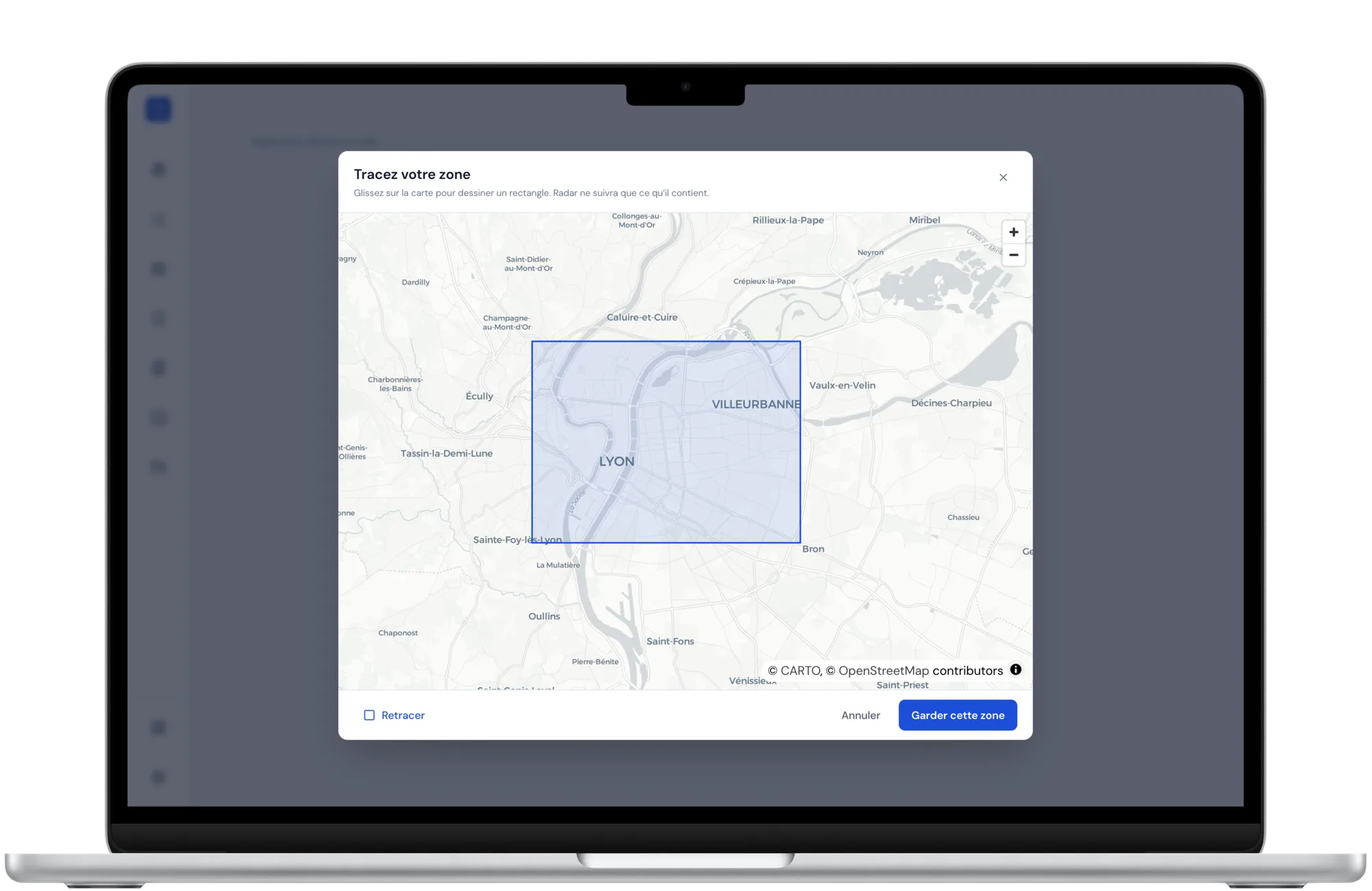
You draw a zone on the map. Radar watches it day and night, and leaves you alone about the rest.
Dozens of public sources cross-checked every night. You call the owner before the property hits the market.
The three moments of prospecting that no longer depends on listings.
You draw a zone on the map. Radar watches it day and night, and leaves you alone about the rest.
A signal drops. You know which plot, which owner, why now — and the published evidence, with its source.
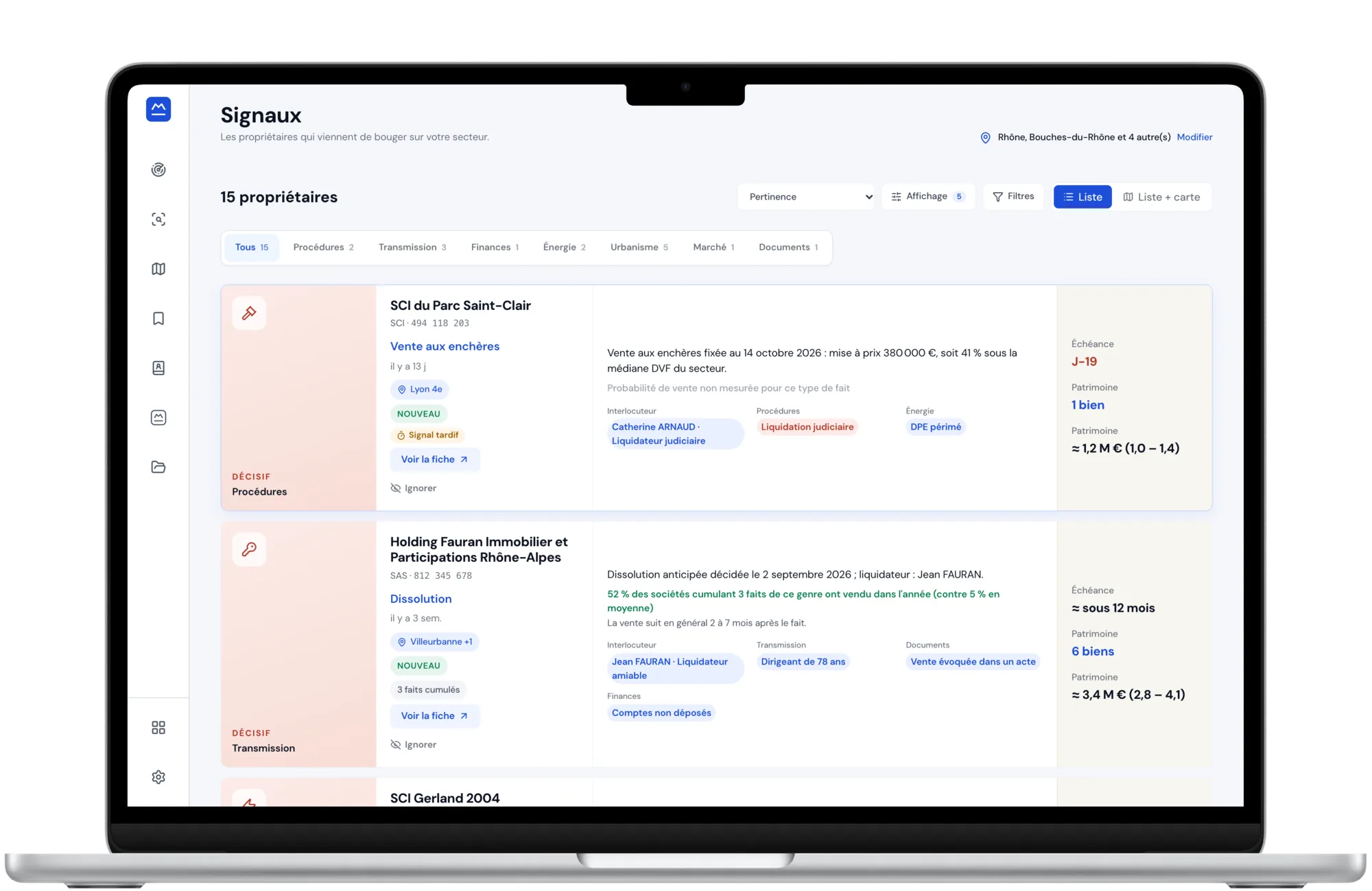
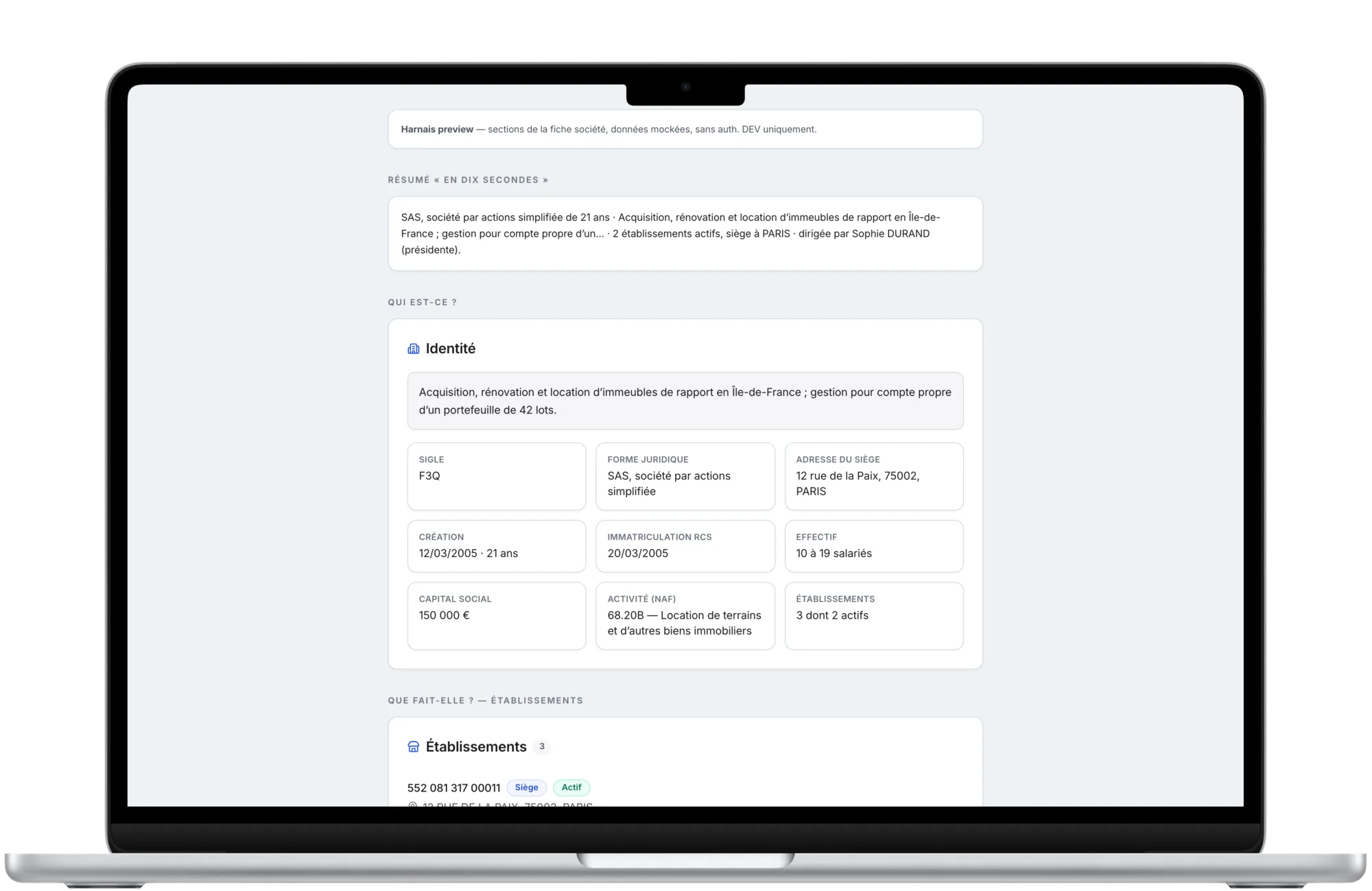
The file is already complete when you pick up the phone: who to call, through which company, since when, and what the property was worth.
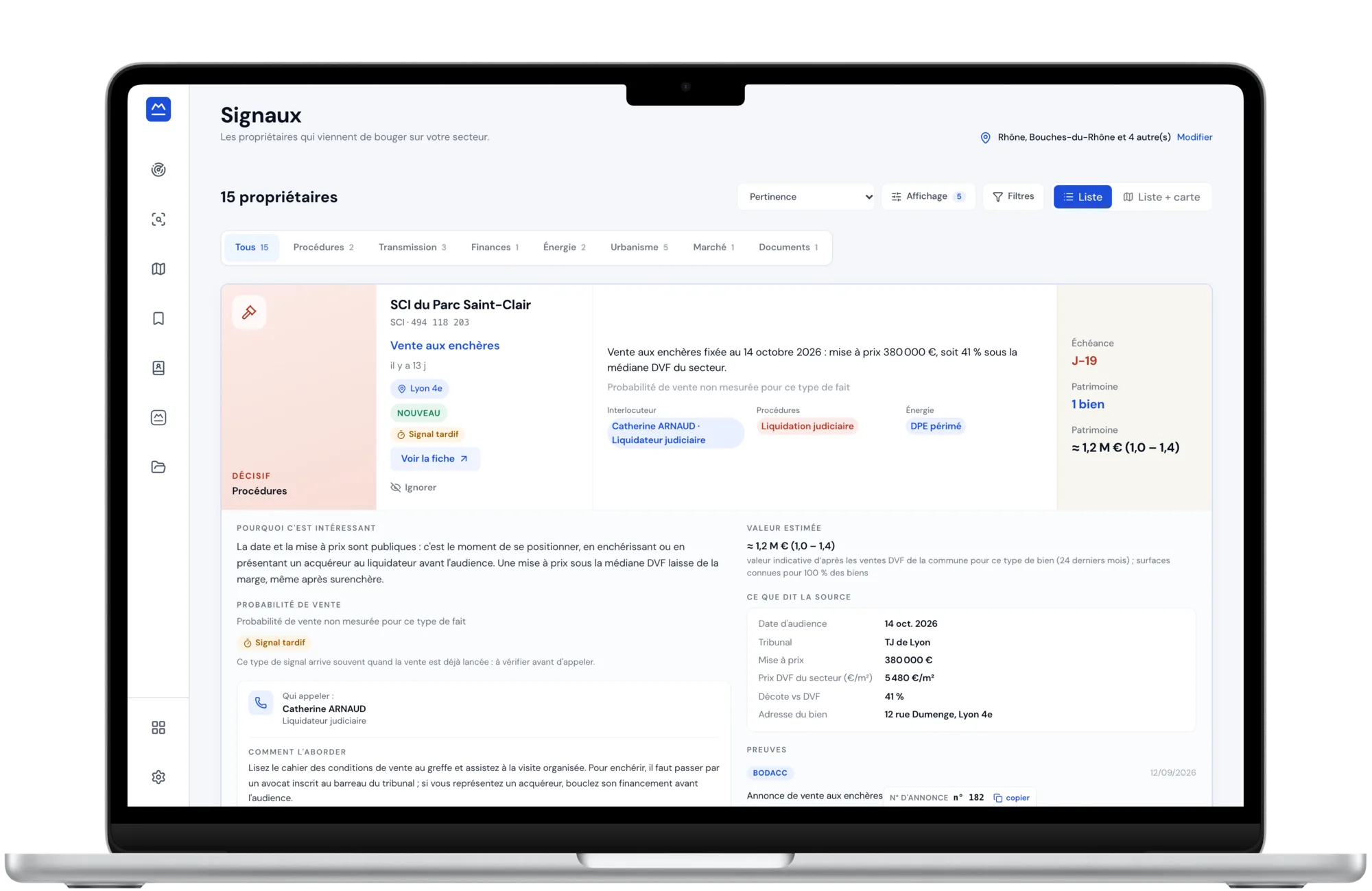
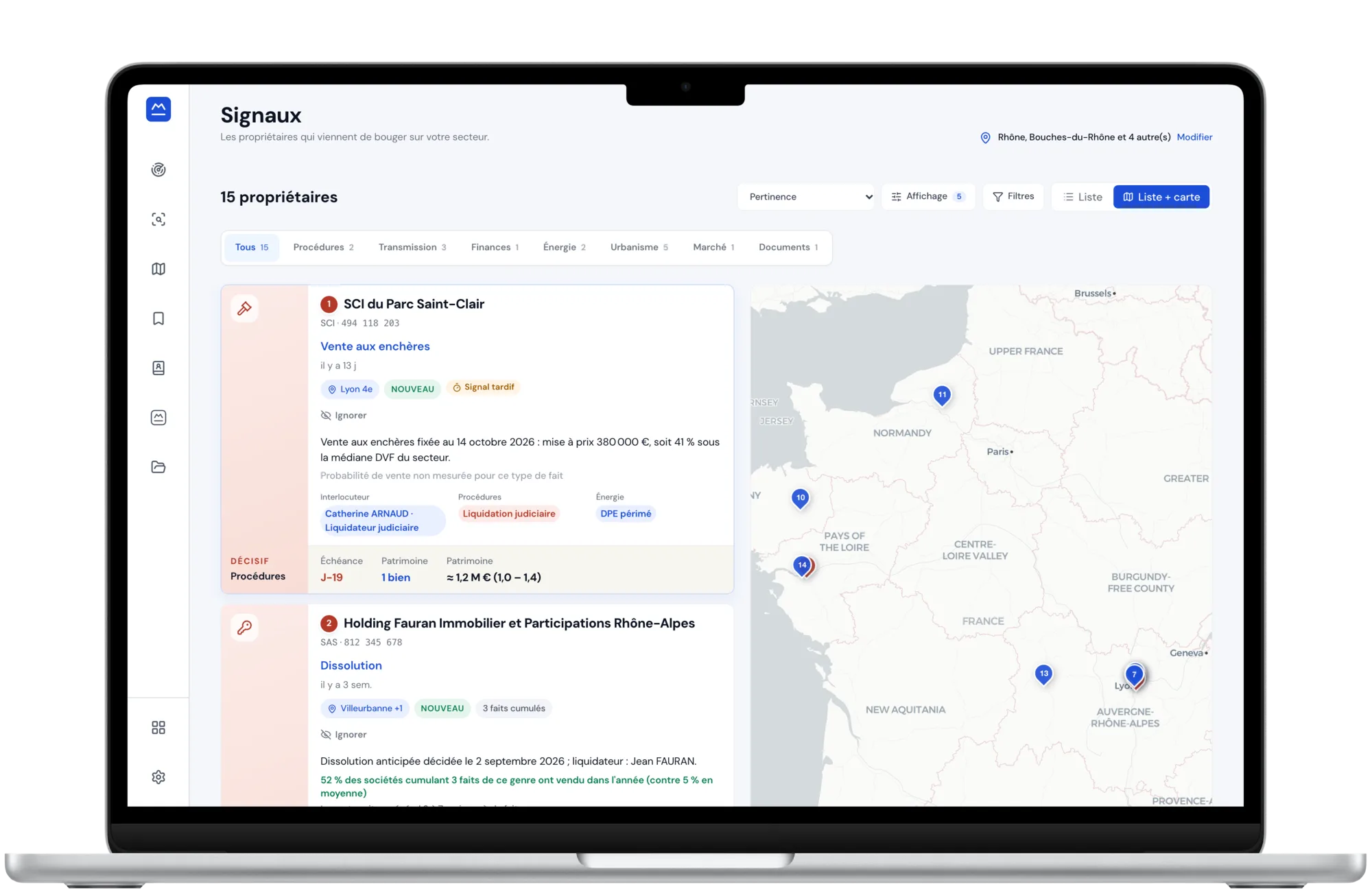
A liquidation, an estate, a dissolved company, a manager nearing retirement, a permit filed next door, a danger order, an energy sieve that can no longer legally be let, accounts in free fall. Radar picks them up every day and ties them to the plot — you only receive the ones in your area.
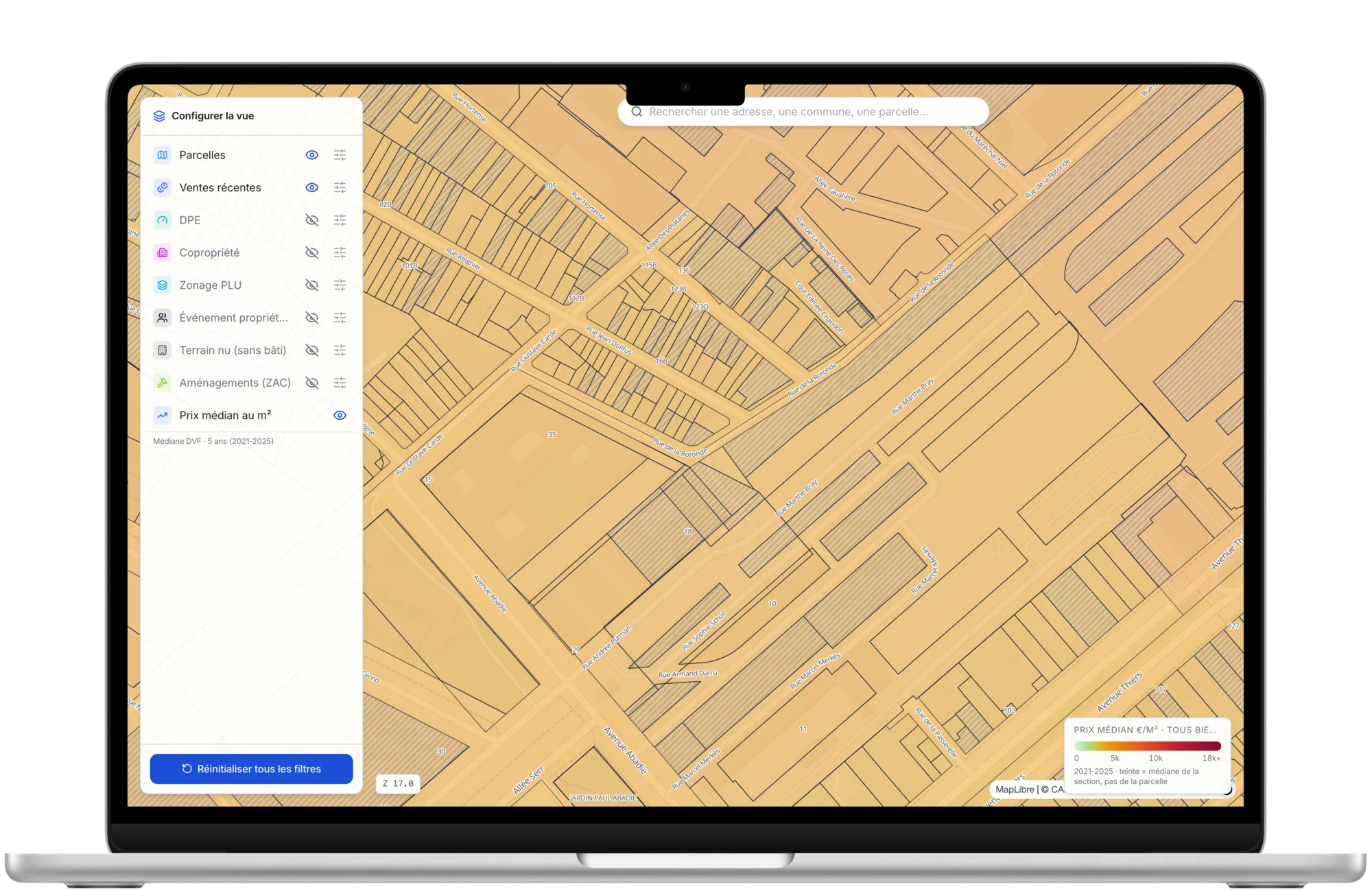
Company registers, BODACC, land registry, property files, actual sales, energy ratings, permits, zoning plans, danger orders: dozens of public sources cross-checked down to the plot. 94.5 million plots, on a single screen.
The signal says something is happening. The assistant says what to do about it.
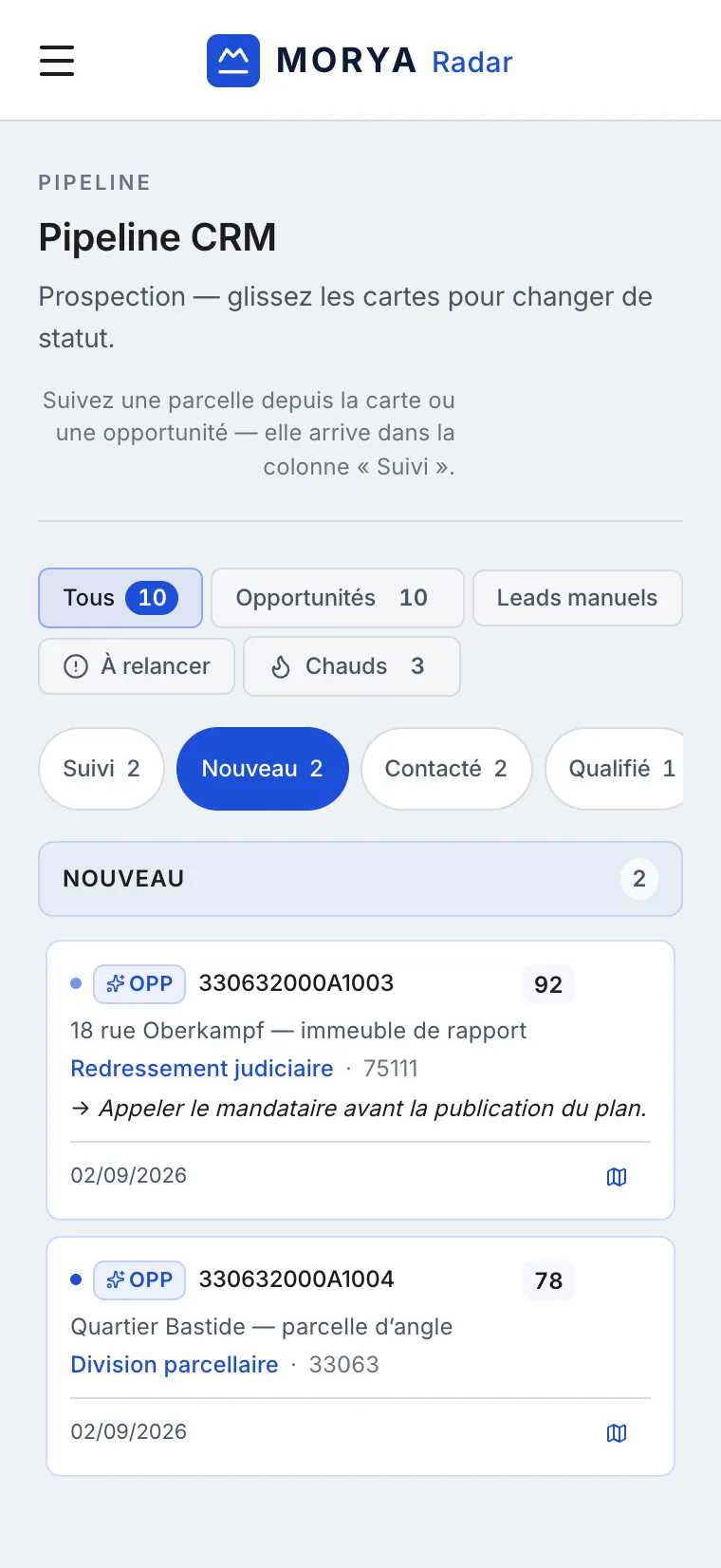
What came out overnight, why, and which ones deserve a call.
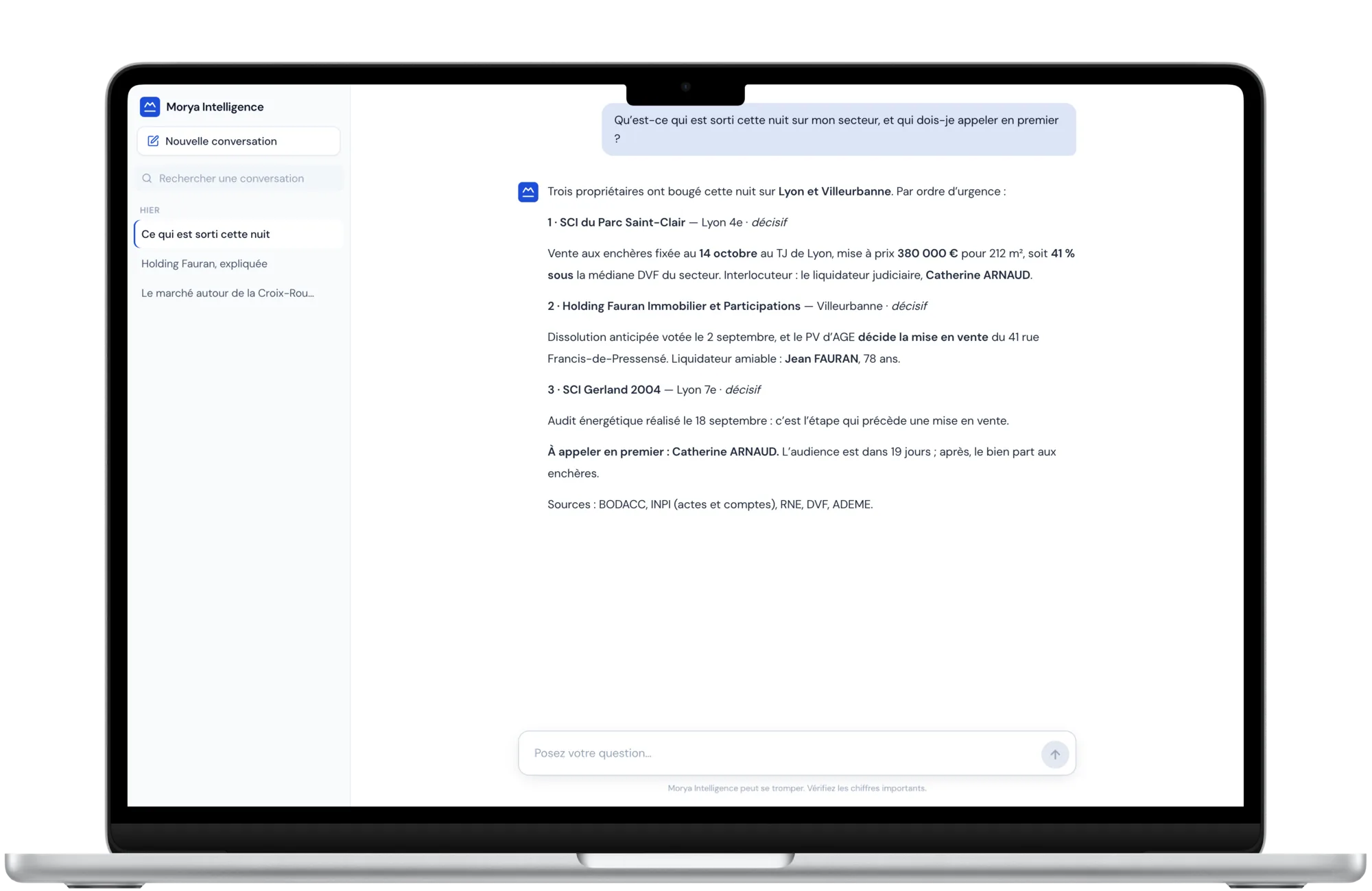
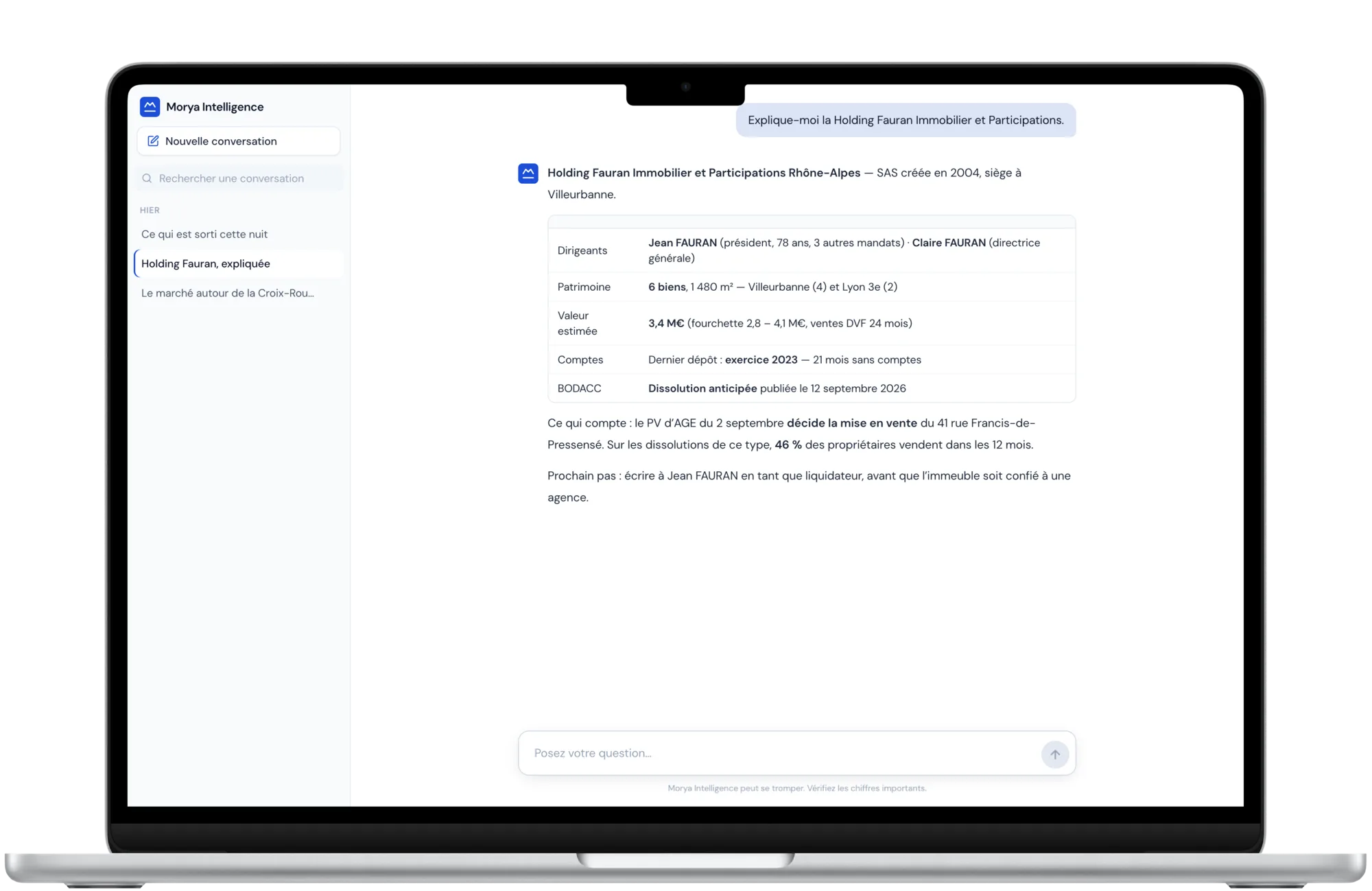
Who runs it, what it owns, what its accounts and the BODACC say.
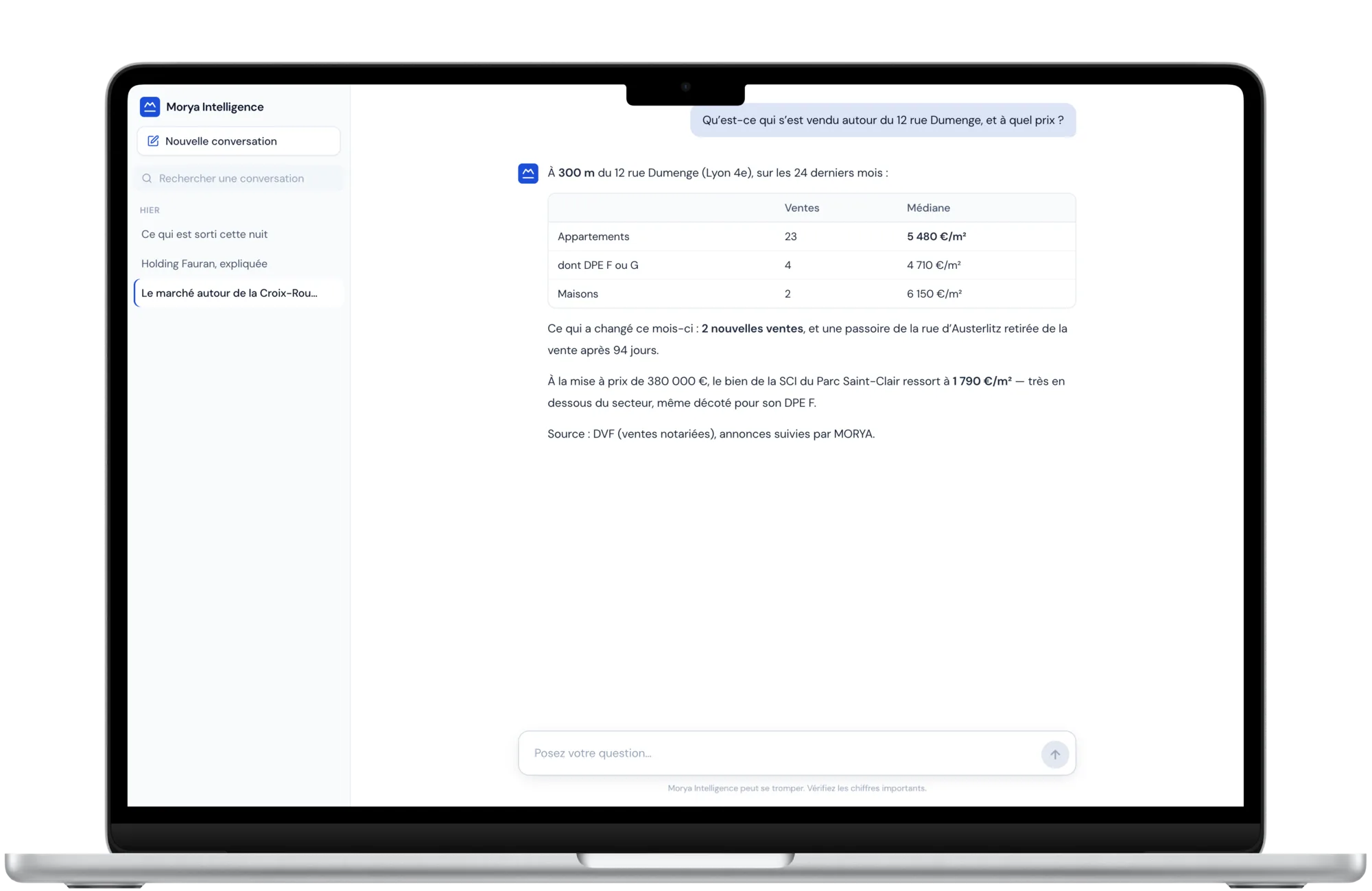
What has sold nearby, at what price, and what changed this month.
MORYA Radar also gives you:
Your data belongs to you. We never sell it, and we protect it with proven security standards.
All the data comes from French public sources: DVF (property transactions), the MAJIC land registry, INPI (company data), BODACC (legal notices), ADEME (energy ratings), INSEE, Géorisques, and more than 70 others. No data is bought from private third parties.
DVF on its own only gives you past transactions. MORYA Radar cross-references it with the land registry, energy ratings, company data (SCI), legal notices and much more to surface weak signals: potentially undervalued properties, at-risk co-ownerships, changes of owner. The value is in the cross-referencing.
You get 7 days of full access with no commitment. At the end of the period, you pick the plan that suits you or you stop at no cost.
Yes. All data is hosted in France with OVH. We use only legally accessible public data. No personal data is collected beyond what the service strictly needs to run.
Yes. MORYA Radar has a single subscription, with no tiers: the pipeline exports to CSV or XLSX, and campaigns to PDF letters or CSV, ready to import into your CRM.
As of 4/11/2026, MORYA Radar cross-references 23.7 million legal notices from the BODACC (latest issue included: 2/11/2026), 44.3 million establishments from INSEE’s SIRENE register (updated 3/11/2026), 26.2 million company filings lodged with the INPI, 18.5 million land parcels owned by legal entities (DGFiP MAJIC files), 17 million DVF property sales from 2014 to 30/6/2026 and 19.9 million energy performance certificates (DPE) from ADEME. All of these sources are public.
Every day. MORYA Radar recomputes 11 types of sale signals daily across all of France: insolvency proceedings or financial distress at an owning company, a change of director, a home rated F or G on its energy certificate, land under-used given the local zoning plan (PLU), nearby building permits, among others. As of 4/11/2026, the computation had run on each of the last 15 days.
Choose a patch, and watch what moves on it. Seven-day free trial.