You do not chase a good payer by mistake
Rent notices go out ahead of time and absorb good-faith oversights. The reminder is therefore only triggered by genuine silence, after a due date and a notice.
A reminder goes out in the landlord’s name, not the software’s. That is why Pilot detects late payments on its own but sends nothing before you have decided — and why, once you arm it, the levels cannot overlap or skip.
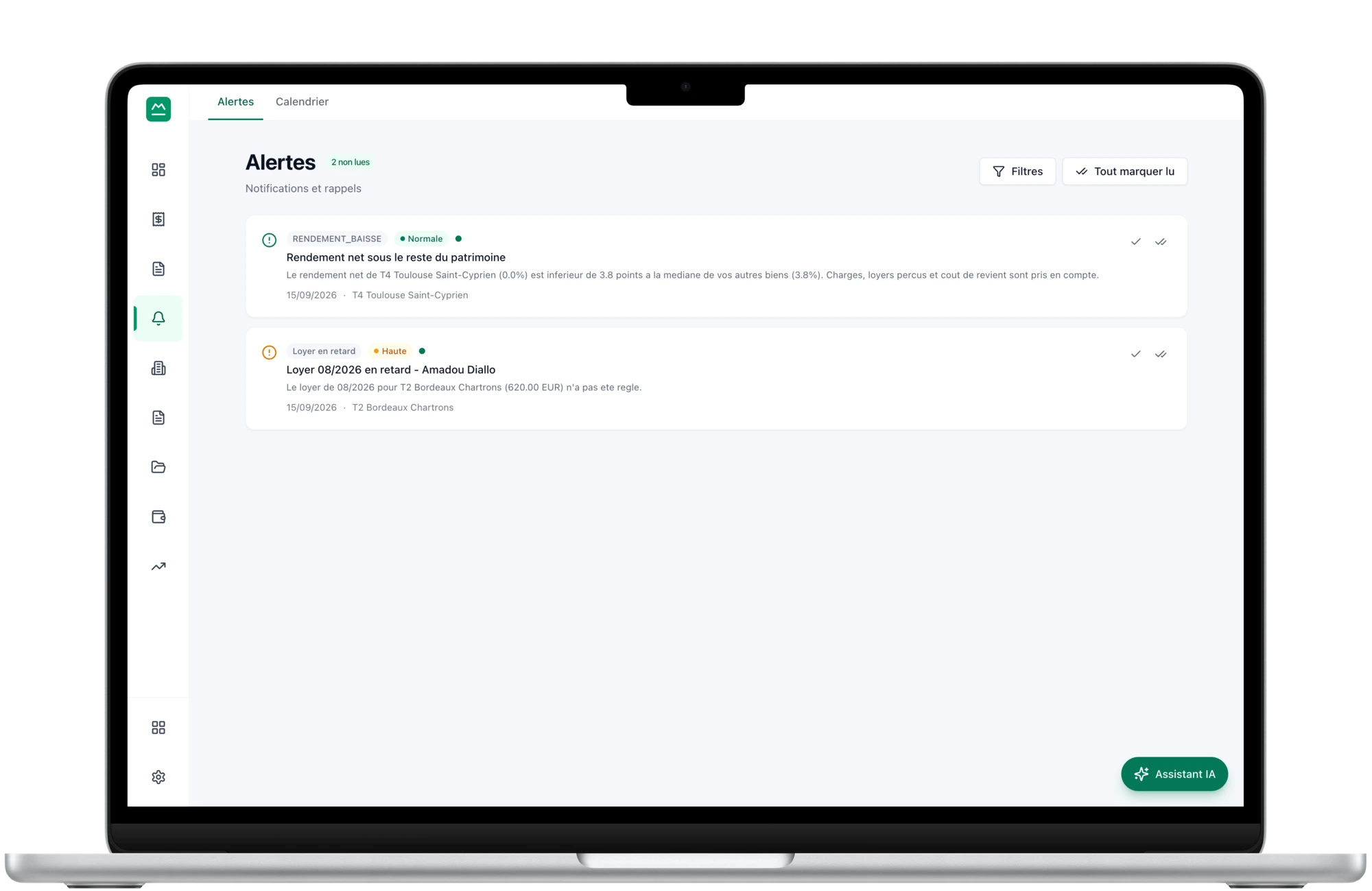
Unpaid rent is handled on a timetable that is anything but intuitive. Rent guarantee insurance, where it exists, requires the claim to be reported within a short contractual deadline — after that deadline, cover lapses, and it is the most common reason for a claim being refused. At the same time, court proceedings do not start when the landlord loses patience but when a specific act has been served, and they then run for months. In between, the time during which an amicable agreement remains possible is counted in weeks. So a graduated reminder is not there to apply pressure: it is there so that each step is documented on its date, so that the next one remains open.
A daily run goes through all tenancies and moves unsettled instalments to late, then to unpaid. This detection does not depend on any bank connection: it relies on the payment schedule and on your confirmations of receipt.
By default, no. Pilot flags arrears to you and leaves the action to you. The day you arm automatic sending, you also choose the interval between two levels — fifteen days by default.
A neutral letter that notes the late payment, restates the amount due and the period concerned, and invites the tenant to settle. At this stage, the vast majority of cases are resolved — which is also why you should not start any higher.
The following levels harden the tone and spell out the consequences, up to the formal demand. The order is strict: level 2 never goes out unless level 1 has gone, and never twice. A reminder that duplicates or skips a step weakens the whole timeline.
Every letter generated is dated and archived in the tenancy file. If you move on to a repayment plan or to proceedings, the history of reminders already exists and does not have to be rebuilt from memory.
Rent notices go out ahead of time and absorb good-faith oversights. The reminder is therefore only triggered by genuine silence, after a due date and a notice.
This is what spreadsheets cannot keep track of: knowing, across thirty units, which reminder went to whom and when. Here the sequence is a property of the system.
Automation is an explicit choice, not a factory default. Many landlords want detection without sending — which is exactly the default state.
art. 24 of Law No. 89-462 of 6 July 1989
No reminder, even by registered post, replaces this commandement de payer. A landlord who has sent three letters and believes they have “done what was needed” has not started the period running: the procedure only begins with the bailiff’s writ, and the months lost before cannot be made up.
art. L. 113-2 of the French Insurance Code; general terms and conditions of the policy
This period is contractual, often short, and it runs from the first unpaid rent — not from the moment the landlord gives up hope. It is the most frequent reason for a claim being refused, and it is entirely avoidable: it is a date to meet, not a negotiation.
art. 24 III of Law No. 89-462disputed point
Failure to notify is penalised, and it cannot be remedied during proceedings without cost. This obligation surprises private landlords, who discover it after incurring costs.
A reminder is a letter sent in your name, with your address, on a matter that calls someone to account. An automatic process switched on by default would have sent letters that landlords had never read.
Nor do we skip a level. A timeline where level 2 comes before level 1, or twice, is a timeline a tenant acting in good faith will contest — and rightly so.
We have no access to your guarantee contracts, and the reporting deadline is contractual. We remind you that this deadline exists and runs from the first unpaid instalment; sending the report remains up to you.
Included from the Essentiel tier.
Not by default. Detecting late payments, yes, every day; sending, no. It is a choice: a reminder is a letter sent in your name, and many landlords want to see before writing. You arm it when you decide to.
No. The termination clause only applies after a commandement de payer (formal order to pay) served by a commissaire de justice (bailiff), and the tenant then has six weeks to pay. Reminders build the amicable timeline; they start no court deadline.
The deadline for declaring a claim is set by your contract, it is often short, and it runs from the first unpaid rent. It is the first thing to do, before waiting to see. We cannot declare it for you — we have no access to your contracts.
Fifteen days by default, adjustable. The order, however, is not adjustable: level 2 never goes out without level 1, and never twice.
No. It relies on the payment schedule and on your confirmations of receipt, with a daily check. Bank detection of transfers will come on top; it will not replace this monitoring.
Sent automatically before the date, at the notice you set.
Issued as soon as payment is recorded, sent to the tenant by email. Never issued for rent not received.
Notices to quit, formal notice, repayment plan, reconciliation, deposit refund, works, insurance, guarantor, managing agent; guarantee deed, certificates, SCI general meetings. Amounts rebuilt instalment by instalment.
Matching of transfers received with the expected instalments.
Content reviewed on 2026-08-06.
At launch: a 7-day trial on your real properties, card required.